

BSA’s Sessions at Midwest Healthcare Engineering Conference
Back To Articles
October 26, 2026
•
Blog, Latest News
•
Healing
BSA Experts to Present on Evidence-Based Design and Healthcare Engineering at Midwest Healthcare Engineering Conference
BSA will share insights on evidence-based healthcare design and high-performance engineering at an upcoming conference, highlighting how research, collaboration and data-driven strategies can improve healthcare environments and support long-term operational performance.
The two sessions will explore complementary approaches to healthcare facility planning, from evaluating how spaces support clinical workflows to optimizing campus-wide energy performance and flexibility.
Beyond the Blueprint: Empowering Healthcare Environments through Evidence-Based Design
- Teri Joy (BSA), Jake Crowl (BSA), Zahra Zamani (BSA), David Lenart (Columbus Regional Hospital)
- Monday, November 9, 2026 | 1:45-2:30 pm
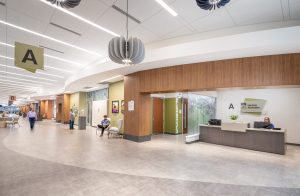
Designing multi-department clinics requires balancing the distinct needs of clinical specialties while supporting efficient workflows, patient privacy and staff well-being. Without careful planning, competing demands can lead to operational inefficiencies, increased staff fatigue and diminished patient satisfaction.
To better understand how design influences performance, the team conducted a post-occupancy evaluation of a multi-department clinic. Through on-site assessments and staff surveys, they examined user satisfaction and operational efficiency, while also validating pre-construction predictions made using Discrete Event Simulation (DES).
The session will explore how these findings can inform future design decisions, helping healthcare organizations anticipate operational challenges before construction and create environments that better support the people who use them.
By connecting research with real-world performance, the team will demonstrate how evidence-based spatial planning can streamline patient care, reduce unnecessary staff movement and support more satisfying, sustainable work environments.
Collaborative Engineering Strategies for a High-Performance, Flexible Healthcare Campus
- William Harmon (BSA), Nicholas French-Seats (BSA), Kevin Hutton (IU Health)
- Tuesday, November 10, 2026 | 10:30-11:30 am
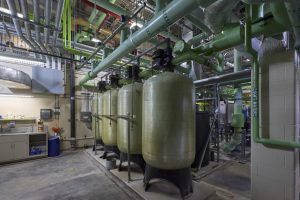
As healthcare systems evolve, engineering solutions must balance energy performance, resiliency, and adaptability, without compromising patient care. This session presents a joint client–engineer perspective on the transformation of the IU Health Saxony Campus in Fishers, Indiana, where a legacy facility with historically low energy performance is being reimagined to support future growth and operational flexibility.
Originally opened in 2012, the campus included a hospital, medical office building/ambulatory surgery center, and a central energy plant (CEP) serving only the hospital, with an Energy Star score of approximately 17-25. A major expansion of more than 200,000 SF, combined with the introduction of new clinical services, created an opportunity to fundamentally rethink energy strategy across both existing and new infrastructure. Through a coordinated approach, the project is projected to elevate the campus Energy Star score to 75.
Key interventions include strategic upgrades to the CEP, such as adding a heat-recovery chiller to meet year-round cooling demand and a right-sized centrifugal chiller to optimize performance during swing seasons. These enhancements enable more efficient equipment staging and reduce reliance on high-load systems. Concurrently, heating strategies were reconfigured to improve system responsiveness and efficiency.
Presented jointly by the owner and engineer, this session highlights how integrated planning, system-level thinking, and strong collaboration can deliver measurable performance gains while building a healthcare environment that is truly built to adapt.
Advancing Healthcare Environments Through Research and Collaboration
Both sessions reflect BSA’s commitment to creating inspired solutions that improve lives. By combining evidence-based design, operational insights and integrated engineering expertise, BSA helps healthcare organizations make informed decisions about their facilities, improve performance and prepare their environments to meet changing needs.
© 2026 BSA | Web Development By SFP